
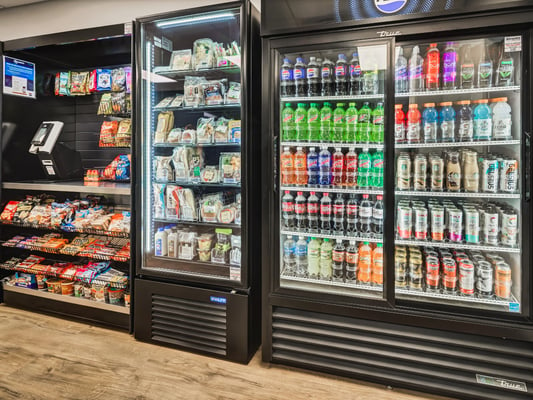
When businesses evaluate their soft drink programs, the focus is often on what to serve. But just as important is how those beverages are delivered. Beverage service is not just an operational decision, it directly shapes the guest experience, influences speed of service, and affects how consistently beverages are served.
In many environments, the choice comes down to two primary models: self-serve fountain stations or staff-served beverage service. Both can be highly effective. The difference is how well they align with your space, your team, and how guests move through your environment.
Speed, convenience, and ease of service continue to rank among the top factors influencing dining satisfaction. That makes the service model you choose just as important as the beverages themselves.
Built for Speed: Where Self-Serve Shines
Self-serve beverage stations are built for efficiency. In high-traffic environments, they allow guests to move at their own pace, reduce pressure on staff, and keep lines moving during peak periods. Guests can fill, refill, and customize their drinks without waiting, which creates a smoother and more flexible experience.This model works especially well in cafeterias, fast-casual restaurants, and large venues where volume is a constant factor.
There is also a sense of autonomy that guests appreciate. Being able to choose portion size, ice level, and refill timing gives them more control over their experience. From an operational standpoint, self-serve setups can help teams focus on food preparation and service rather than beverage handling, which can improve overall efficiency.
Research highlights how self-service models can improve throughput and reduce bottlenecks during peak hours, particularly in quick-service and high-volume environments. When speed and volume are priorities, self-serve often becomes the natural fit.
Where Service and Presentation Take Priority
In other environments, control and presentation matter more than speed alone. Staff-served beverage models allow for a more consistent and curated experience. Drinks are prepared and delivered in a way that aligns with the brand, the setting, and guest expectations.
This is especially important in full-service restaurants, healthcare environments, and hospitality settings where the overall experience is more structured. Staff-served models also allow businesses to maintain tighter control over portions, presentation, and cleanliness. That consistency can be important in environments where perception matters just as much as efficiency.
There is also a service element. Having beverages delivered as part of the experience can feel more complete and intentional, particularly in settings where guests expect a higher level of attention. Service quality remains one of the most important drivers of guest satisfaction, reinforcing the role of staff interaction in the overall experience.
In these environments, staff-served beverage service often supports the broader experience more effectively.
How to Choose Based on How You Operate
Choosing between self-serve and staff-served beverage service is not just a matter of preference. It is about how your environment functions day to day.
- Staffing is often one of the biggest factors. Teams with limited staff may benefit from self-serve models that reduce hands-on involvement. Environments with dedicated service staff may be better positioned to support staff-served beverage programs.
- Space also plays a role. Self-serve stations require accessible, well-placed areas that allow guests to move comfortably. Staff-served models rely more on back-of-house or service station design.
- Peak periods matter as well. High-volume rushes often favor self-serve setups that can handle demand without slowing service. Lower-volume or more controlled environments may benefit from staff-served consistency.
- Cleanliness expectations are another consideration. Self-serve models require regular monitoring and upkeep to maintain a clean and well-stocked station. Staff-served models centralize that responsibility.
According to Foodservice Equipment Reports, operational efficiency in beverage station design is closely tied to layout, accessibility, and ease of maintenance. The right model is the one that fits how your space functions best.
Finding the Right Balance Between the Two
In many cases, the most effective beverage programs combine both approaches. A self-serve fountain may handle high-volume traffic, while staff-served beverages support specific areas or experiences within the same environment.
For example, a cafeteria might use a self-serve fountain during peak lunch hours while offering staff-served beverages in adjacent dining or hospitality spaces. A healthcare facility might balance accessibility with controlled service depending on the setting.
This hybrid approach allows businesses to maintain efficiency without sacrificing consistency or experience. It also creates flexibility. As traffic patterns change throughout the day, the service model can support different needs without requiring a complete shift in setup.
FAQ: Soft Drinks in Foodservice Environments
- When should a business use staff-served beverages?
Staff-served models are ideal in full-service, healthcare, or hospitality environments where consistency and presentation are important. - Is self-serve or staff-served more efficient?
Self-serve is typically more efficient in high-volume environments, while staff-served can provide more control and consistency. - Can businesses use both service models?
Yes. Many businesses use a hybrid approach to balance efficiency, guest experience, and operational needs.
How You Serve Matters More Than You Think
There is no single answer when it comes to beverage service models. The most effective approach is the one that supports your team, aligns with your space, and meets your guests where they are.
In some environments, that means prioritizing speed and autonomy. In others, it means focusing on consistency and presentation. And in many cases, it means finding the right balance between the two.
When beverage service is designed with intention, it does more than deliver drinks – it supports the entire experience.

